
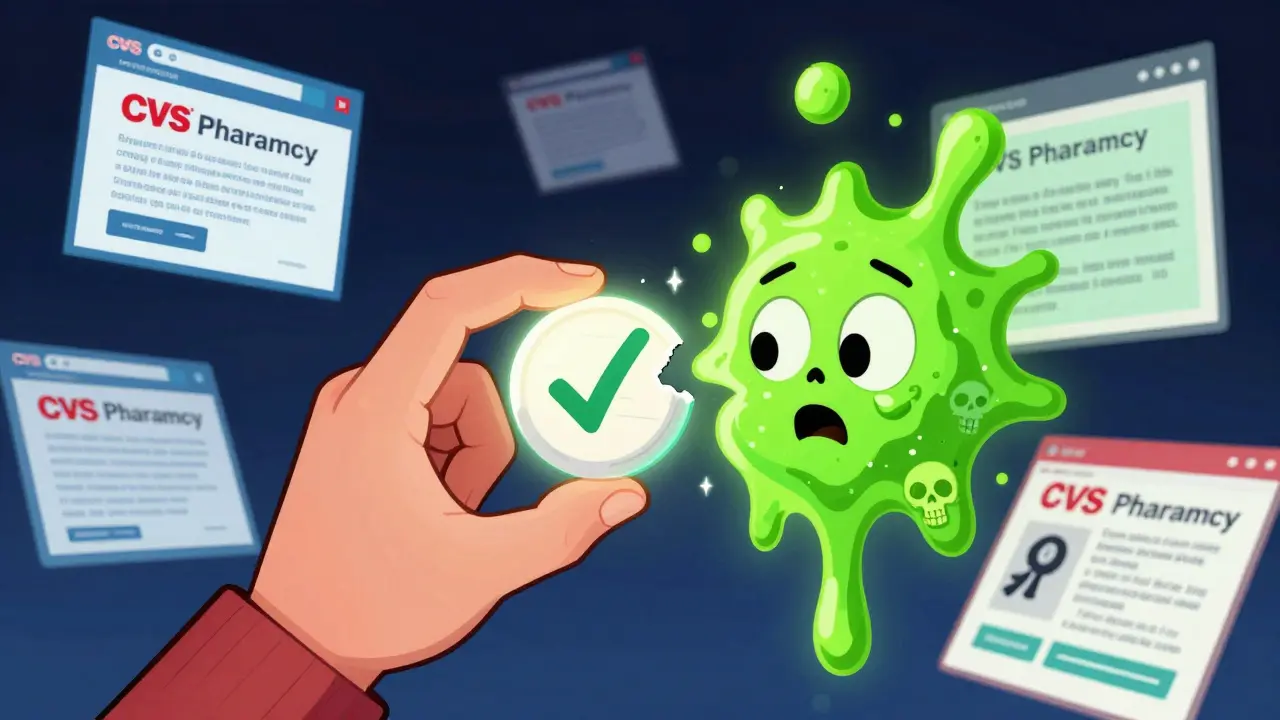
Buying medicine online feels easy-until you realize you might be holding a fake pill. In 2023, the World Health Organization reported over 1,500 cases of falsified drugs across 141 countries. These aren’t just ineffective-they can kill. A single counterfeit pill laced with fentanyl can be lethal. And the worst part? Many look identical to the real thing.
If you’ve ever ordered generics online because they were cheaper, you’re not alone. But here’s the truth: counterfeit generics are one of the fastest-growing health threats today. They’re sold by websites that look real, use fake logos, and even mimic the packaging of major brands. And without lab tests, you can’t know for sure if what you’re taking is safe.
What Makes a Generic Medicine Counterfeit?
Not all generics are fake. Legitimate generics contain the same active ingredient as brand-name drugs, at the same strength and dosage. They’re approved by regulators like the FDA and TGA. But counterfeit generics? They’re made in secret labs, often in countries with weak oversight. They might have no active ingredient at all. Or worse-they contain toxic substances like crushed drywall, rat poison, or fentanyl.
In Asia, more than half of counterfeit malaria drugs contain zero active drug. In North America, the DEA seized over 134 million fake pills between January 2023 and October 2024. Most of these were disguised as oxycodone, Adderall, or Xanax. But they were actually fentanyl-deadly in tiny doses.
Counterfeiters don’t just copy the pill. They copy the bottle, the label, the blister pack-even the font. One user on Reddit bought what looked like Viagra from a website that didn’t end in .pharmacy. The pills dissolved in water in seconds. The real version takes over 20 minutes. That’s how you know something’s wrong.
How to Spot a Fake Online Pharmacy
Most online pharmacies are illegal. A 2022 survey by the National Association of Boards of Pharmacy found 96% of sites selling prescription drugs operate without licenses. And 88% don’t require a prescription.
Here’s how to tell if a site is legit:
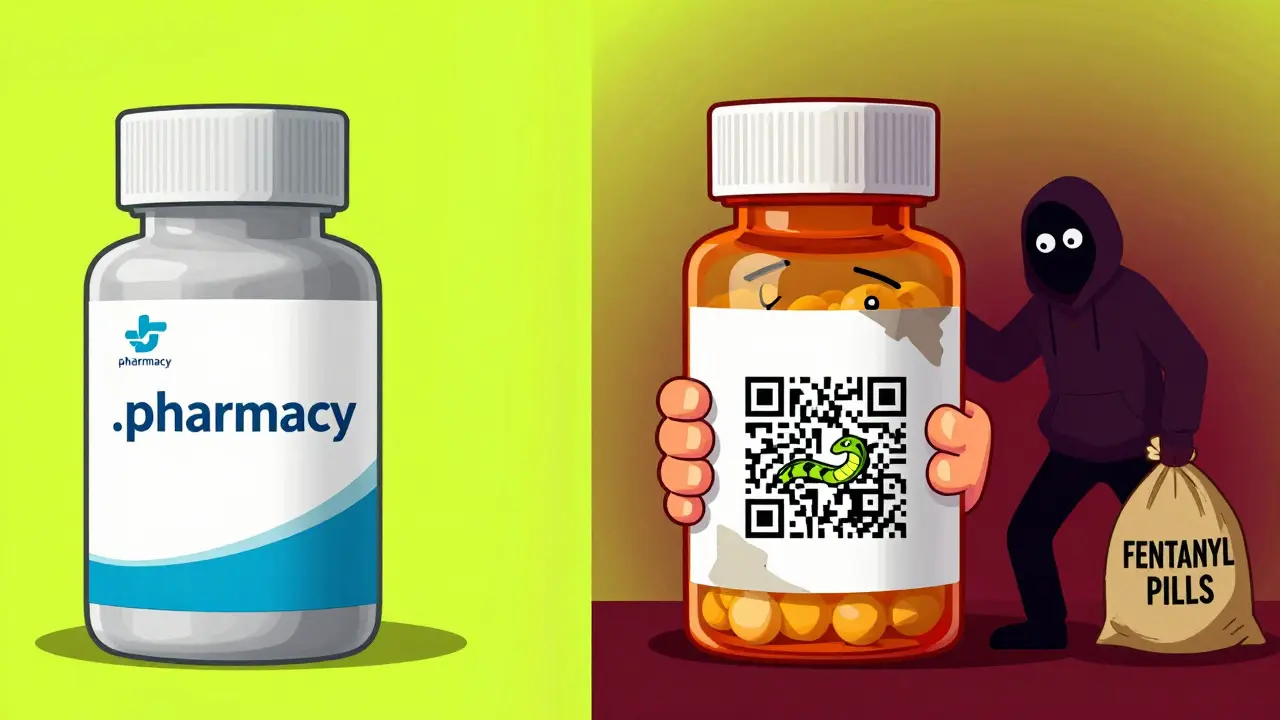
- Look for the .pharmacy domain. This isn’t just a fancy name-it’s a verified seal. Only pharmacies that meet strict safety, licensing, and privacy rules can use it.
- Check for a physical address and working phone number. Call them. If they don’t answer, or if the number is a VoIP line, walk away.
- See if a licensed pharmacist is available for questions. Legit pharmacies have pharmacists on staff to review your prescription and answer your concerns.
- Never buy without a prescription. If a site lets you buy pills without one, it’s illegal. Period.
- Check reviews on Trustpilot or the Better Business Bureau. Legit .pharmacy sites average 4.7 out of 5 stars. Fraudulent ones hover around 2.1.
Scammers copy real websites. They use similar colors, same layout, even fake testimonials. One user thought they were buying from CVS until they noticed the spelling error on the logo. It said "CVS Pharamcy"-not "Pharmacy".
What to Look for on the Packaging and Pills
Even if the website looks real, the product might not be. Here’s what to examine when your medicine arrives:
- Color and shape: If your pills are a different shade, size, or shape than what you’ve taken before, don’t take them. Even small changes matter.
- Imprints: Legit pills have clear, sharp lettering or numbers pressed into them. Counterfeits often have blurry, uneven, or faded imprints. The DEA says fake pill makers now use professional presses to copy these exactly-but they still get it wrong in tiny ways.
- Label details: Check the manufacturer name, lot number, expiration date, and spelling. Fake labels often have typos, odd fonts, or mismatched colors.
- Packaging quality: Real blister packs are crisp. The foil doesn’t tear easily. Fake ones feel cheap, with loose seals or misaligned text.
- Smell and texture: If the pill smells weird-chemical, plastic, or metallic-it’s a red flag. Real pills usually have no smell at all.
One woman bought blood pressure medication online. The pills were white instead of blue. She took one and felt dizzy, nauseous, and had a burning sensation in her chest. She called her doctor. It was a counterfeit. The real version didn’t cause those side effects.
When You Can’t Tell-What to Do
Here’s the hard truth: You can’t be 100% sure without lab testing. Even experts say that. Amy Callanan from Pfizer says visual checks help-but their absence doesn’t mean the drug is safe.
So what do you do if you’re unsure?
- Call the manufacturer. If you have the lot number, call the drug company. They track counterfeits. Pfizer, GlaxoSmithKline, and Johnson & Johnson all have hotlines for this. They can tell you if that batch was ever made or distributed.
- Compare with your last bottle. Keep your old packaging. Side-by-side, you’ll spot differences in font size, logo placement, or barcode design.
- Report it. In Australia, report suspicious drugs to the TGA. In the U.S., report to the FDA. These agencies use reports to track fake drug rings.
- Don’t take it. If anything feels off, don’t risk it. Throw it away and get a new prescription from your doctor.
There’s no app that can guarantee authenticity. Some AI-powered QR scanners like MediGuard claim 92% accuracy-but they’re not foolproof. Counterfeiters are now printing fake QR codes that link to fake verification pages. Don’t rely on them.
Why Price Is a Major Red Flag
If it’s too good to be true, it is. Legitimate pharmacies don’t sell brand-name drugs at 80% off. They don’t sell prescription generics for $1 a pill.
Counterfeiters undercut prices because they don’t pay for R&D, quality control, or compliance. Their cost? A few cents per pill. They make profit by volume.
WHO estimates the global market for fake drugs is worth $200 billion a year. That’s 10.5% of all pharmaceutical sales. And it’s growing at 22% annually.
Don’t be tempted by the bargain. The cost of a fake pill isn’t just money. It’s your health. Your life.

How to Stay Safe Long-Term
There’s no perfect system-but you can stack defenses:
- Always get prescriptions from your doctor. Never buy from sites that don’t require one.
- Use only .pharmacy verified sites. Check the list at nabp.pharmacy (no links in final output, but the domain is referenced).
- Buy from local pharmacies when possible. Even if it costs more, you’re safer.
- Keep records of your prescriptions and packaging. This helps if you need to report an issue.
- Ask your pharmacist to check your meds when you pick them up. They’re trained to spot fakes.
- Stay informed. Follow updates from the WHO, FDA, and TGA. They issue alerts on new fake drugs.
Pharmaceutical companies are fighting back. Pfizer’s blockchain pilot program verified 99.6% of shipments across 15 countries. The FDA now requires full track-and-trace systems on all prescription drugs by 2025. But until then, you’re the last line of defense.
What Happens If You Take a Fake Pill?
It depends on what’s in it.
If it has no active ingredient, your condition gets worse. Diabetes meds without insulin? Blood sugar spikes. Heart meds without metoprolol? Risk of heart attack. Antibiotics without amoxicillin? Infection spreads.
If it contains fentanyl? You could die within minutes. The DEA says 7 out of 10 fake pills contain a lethal dose.
If it contains toxic fillers? Organ damage. Liver failure. Seizures. Long-term harm.
Most people don’t realize they took a fake until they feel sick-or someone they know dies.
One man in Melbourne bought erectile dysfunction pills online. He took one and collapsed. He survived, but spent three days in ICU. The pills had no sildenafil. Instead, they had a banned stimulant linked to heart arrhythmias.
Don’t wait for a tragedy to act.
How can I tell if my generic medicine is fake?
Look for changes in color, shape, size, or imprint on the pill. Compare the packaging to your last bottle-check spelling, font, and manufacturer details. If the pills dissolve too fast in water or smell odd, that’s a red flag. But remember: fake drugs are getting better at copying real ones. The only way to be 100% sure is lab testing.
Are all online pharmacies dangerous?
No-but 96% of them are. Only pharmacies with the .pharmacy domain are verified by the National Association of Boards of Pharmacy. These sites require prescriptions, have licensed pharmacists, and follow safety rules. Avoid any site that sells without a prescription or doesn’t list a physical address.
Can I trust apps that scan QR codes on medicine packaging?
Some apps, like MediGuard, are helpful-but they’re not foolproof. Counterfeiters now print fake QR codes that link to fake verification pages. These apps can give false confidence. Always combine them with other checks: compare packaging, call the manufacturer, and check the .pharmacy domain.
What should I do if I think I bought a counterfeit drug?
Stop taking it immediately. Call the drug manufacturer with the lot number-they track counterfeits. Report it to your country’s health regulator (TGA in Australia, FDA in the U.S.). Then, get a new prescription from your doctor. Don’t throw it away without reporting-it helps authorities track criminal networks.
Why are counterfeit drugs so common online?
Because it’s profitable and easy. Online sales of fake drugs are growing at 22% a year. Criminals use fake websites, social media ads, and search engine tricks to reach people looking for cheap meds. They target people in pain, seniors on fixed incomes, and those without easy access to doctors. The lack of global enforcement makes it hard to shut them down.
Is it safe to buy generics from other countries?
Only if they’re from a regulated pharmacy in a country with strong drug safety laws-like Canada, the UK, or Australia. Avoid websites based in countries with weak oversight, like some in Asia or Eastern Europe. Even then, verify the pharmacy is licensed and has a .pharmacy domain. Never buy from sites that don’t require a prescription.
Final Advice: Your Health Is Worth More Than a Bargain
Counterfeit drugs aren’t just a distant problem. They’re in your mailbox, your medicine cabinet, your daily routine. And they’re getting smarter.
The best protection isn’t technology. It’s awareness. It’s asking questions. It’s refusing to cut corners when your health is on the line.
If you need a prescription drug, get it from your local pharmacy. If you must order online, use only .pharmacy sites. Always check the packaging. Always call the manufacturer if something feels off.
There’s no shortcut to safety. But there is a simple rule: If it’s too cheap, too easy, or too good to be true-it probably is.



Aayush Khandelwal
Bro, this is straight-up cyber-pharma warfare. We’re talking about pill-based asymmetric threats here-counterfeit generics are the IEDs of the pharmaceutical supply chain. The fentanyl-laced oxycodone scams? That’s not fraud, that’s premeditated homicide with a pill dispenser. And the fact that these scams exploit the very people who can’t afford real meds? That’s capitalism with a side of bloodlust.
Legit generics are fine, but the gray-market vendors? They’re not pharmacies-they’re underground labs with Shopify stores. I’ve seen sites that mimic CVS’s UI but have a .top domain. The imprint on the pill? Blurry. The blister pack? Feels like it was printed on a thermal receipt printer. One guy in Delhi died last year from ‘Viagra’ that had industrial dye and caffeine anhydrous. No sildenafil. Just a sugar cube with a death sentence.
And don’t get me started on QR code scams. Fake verification portals that look like Pfizer’s portal but redirect to a .xyz domain. I once ran a batch through a spectrometer-turns out the ‘metformin’ had zero active ingredient. Just cellulose and chalk. The manufacturer’s lot number? Totally fabricated. The FDA’s track-and-trace system? Still in beta. We’re all playing Russian roulette with our prescriptions.