
Quick Summary
- You do not need to avoid green vegetables entirely. Eliminating all vitamin K-rich foods can make your blood chemistry unstable.
- Consistency is the golden rule. Eat roughly the same amount of vitamin K each day rather than trying to hit a specific low target.
- A sudden spike in greens drops your INR. Eating a large kale salad when you normally eat fruit can lower your International Normalized Ratio by 0.5-1.0 units.
- Track your meals. Using a food diary helps your doctor adjust your dose accurately during fluctuations.
- Communicate immediately after dietary changes. Inform your clinic if you plan a 'health kick' or holiday feast involving leafy greens.
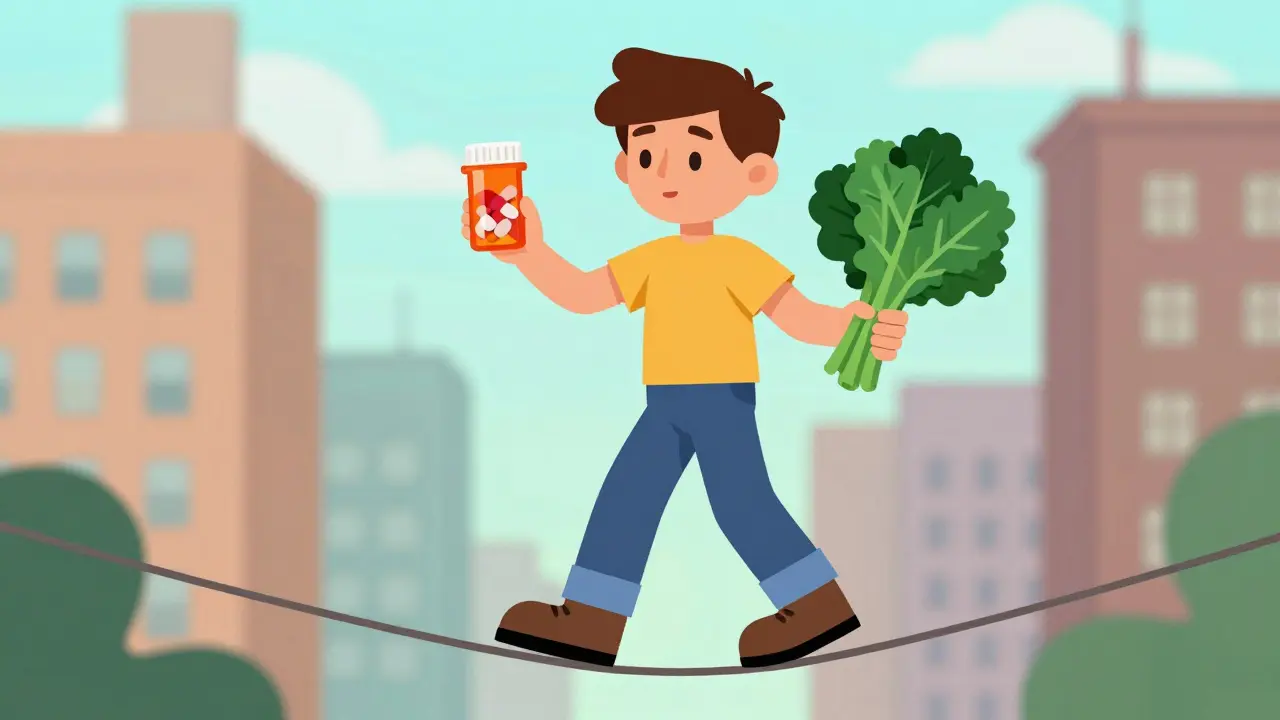
Living with Warfarin, often known by its brand name Coumadin, requires a delicate balance between medication and nutrition. Many patients assume they must starve themselves of leafy greens to stay safe, but this approach often causes more harm than good. The reality is simpler: your body needs stability, not restriction. When you take this medication, you are essentially walking a tightrope. On one side lies the risk of dangerous clots; on the other, the risk of excessive bleeding. Vitamin K acts as the counterweight that shifts you along that rope.
Why Vitamin K Changes How Warfarin Works
To understand why your dinner plate matters, you have to look at the biology. Vitamin K is essential for making proteins that help your blood clot. Specifically, it activates factors II, VII, IX, and X in the coagulation cascade. Warfarin works by blocking the enzyme VKORC1, which prevents your liver from recycling Vitamin K back into its active form. Think of Vitamin K as the fuel for your clotting engine and Warfarin as a throttle limiter.
If you suddenly add more fuel (eat a massive bowl of spinach) without adjusting the limiter, the engine revs higher, and your blood clots too easily. Conversely, if you stop eating greens abruptly, the engine stalls, and your blood thins too much. This relationship is measured by the International Normalized Ratio (INR). Your doctor wants this number usually between 2.0 and 3.0. Research shows that increasing your daily Vitamin K intake by just 100 micrograms can drop your INR by 0.5 to 1.0 units. That shift moves you from a therapeutic range into a zone where clots might form.
The Vitamin K Food List: What Counts?
Panic is unnecessary once you know what you are eating. You don't need to memorize every micronutrient profile, but you do need to recognize the heavy hitters. Most dietary Vitamin K comes in two forms: phylloquinone (found in plants) and menaquinones (found in fermented foods). Dark leafy greens are the primary culprits here because they concentrate the nutrient for photosynthesis.
| Food Item | Serving Size | Vitamin K Amount |
|---|---|---|
| Cooked Kale | 1 Cup | 1,062 mcg |
| Cooked Spinach | 1 Cup | 889 mcg |
| Raw Swiss Chard | 1 Cup | 299 mcg |
| Brussels Sprouts | 1 Cup | 156 mcg |
| Cooked Broccoli | 1 Cup | 102 mcg |
| Raw Asparagus | 1 Cup | 70 mcg |
| Rice (White) | 1 Cup | 0 mcg |
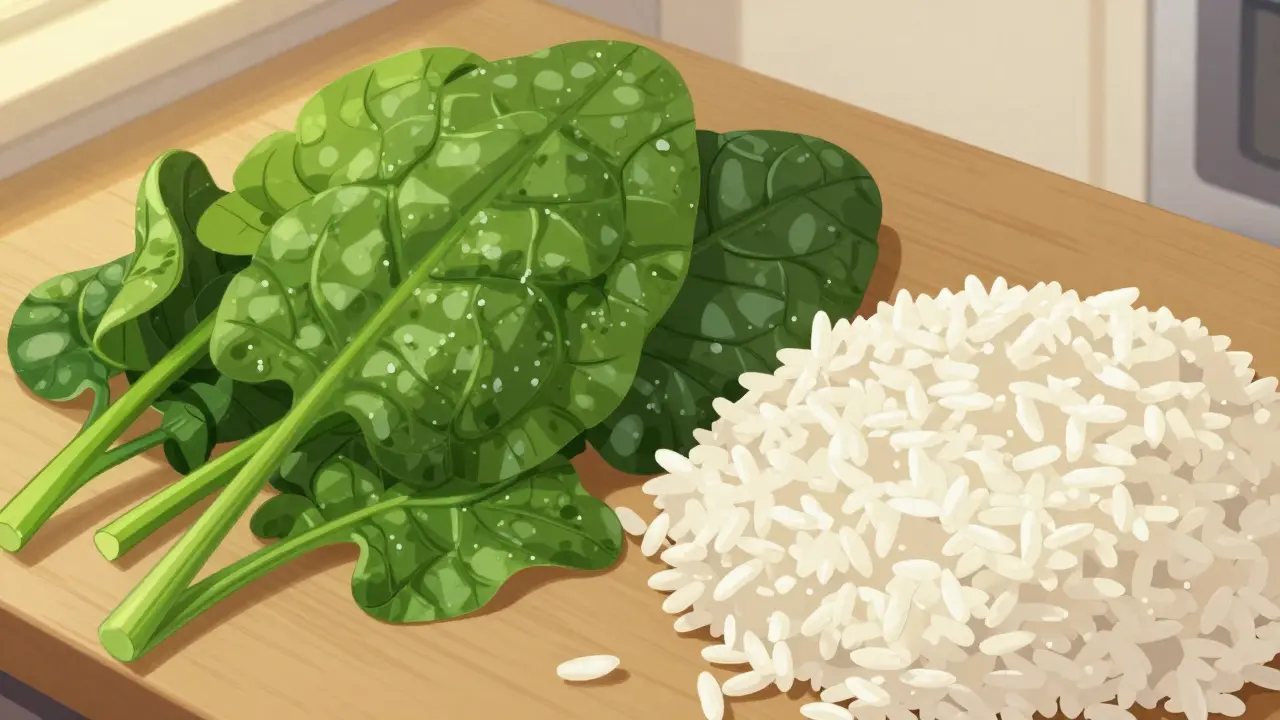
Notice the difference between Kale and Rice? One serves as a powerhouse of the nutrient, the other is neutral. If you typically eat two cups of broccoli a week, switching to three cups of kale a week is a significant shock to your system. However, if you already eat two cups of broccoli every Tuesday and Thursday, you are likely well-adjusted to that load. Your goal isn't to eliminate the kale but to keep the schedule predictable.
Maintaining Consistency Without Stress
You might wonder how to keep your intake level when seasons change or friends invite you for a feast. The American Heart Association advises maintaining a consistent daily intake rather than avoiding foods entirely. Studies indicate that patients who vary their intake by less than 20% keep their INR in range 78% of the time. Those who fluctuate more widely succeed only 42% of the time.
Start by establishing a baseline. Ask yourself: How many servings of leafy greens do I eat in a typical week? Is it mostly salads, or does it include cooked stir-fries? Once you define your normal, stick to that pattern. Here is how to handle common disruptions:
- Seasonal Changes: Winter vegetables like cabbage replace summer greens like lettuce. While both are veggies, cabbage contains less Vitamin K. If you switch in autumn, do it gradually over a few weeks so your body adapts.
- Restaurant Meals: Buffets are risky. A large salad bar offering unlimited spinach allows you to accidentally double your usual dose. Opt for cooked sides instead, or ask the server to hold the leafy garnish if you aren't sure of the quantity.
- Dietary Trends: Jumping on a 'cleanse' or a sudden 'high-veggie' diet is dangerous. A patient reported their INR dropped from 2.8 to 1.9 after three days of kale-based cleansing. That requires immediate medical attention and dose adjustment.
Practical tracking tools help immensely. Keep a simple log noting what you ate and roughly how much. You don't need precise micrograms, but knowing you had 'two medium handfuls of spinach' helps your dietitian compare patterns against your INR results. The University of North Carolina found that patients receiving individualized counseling maintained stable levels 85% of the time compared to 65% with standard care alone. That suggests talking about your food with a specialist makes a tangible difference.
What to Do When Things Go Wrong
Life happens. Sometimes you go on vacation, or a catered wedding serves a huge green salad. Missing a check-in or eating outside your norm doesn't mean disaster, but it does mean vigilance. If you consume an unusually high amount of Vitamin K-more than double your usual intake-you may need to increase your Warfarin dose slightly the next day. However, never adjust the pill count on your own. Call your anticoagulation clinic.
Signs that your INR might be off include unusual bruising or feeling lightheaded (indicating thinning blood), or conversely, swelling in the legs or shortness of breath (potential clots). Monitoring protocols suggest testing every 2-4 weeks when stable, but frequency increases during dietary changes. If you suspect a major dietary error, request a test sooner rather than waiting for the next scheduled appointment.
Your doctors prefer proactive communication. Telling them, 'I had a big garden party meal yesterday,' allows them to interpret a low INR result correctly. They can distinguish between a drug-resistant issue and a simple dietary spike. This transparency keeps you within the safety net of your therapeutic range.

Frequently Asked Questions
Can I drink green tea while on Warfarin?
Green tea contains varying amounts of Vitamin K, typically 41-88 mcg per serving depending on preparation. It is generally safe if you drink a consistent amount regularly. Avoid suddenly changing your consumption habits.
Should I stop taking multivitamins?
Check the label. Some multivitamins contain synthetic Vitamin K. If yours does, take it consistently every day at the same time. Ideally, consult your pharmacist to switch to a formulation without added Vitamin K to reduce variables.
Does cooking destroy Vitamin K?
Cooking concentrates Vitamin K by reducing water content, but it does not significantly destroy the nutrient. Therefore, one cup of cooked spinach delivers more Vitamin K than one cup of raw spinach leaves. Portion volume matters.
How quickly does diet affect my INR?
Changes in dietary Vitamin K can impact your INR within 24 to 48 hours. Your doctor recommends re-testing promptly if you made a significant deviation from your normal diet.
Is there a safe limit of Vitamin K I can eat?
There is no toxic upper limit for healthy people, but for Warfarin users, the limit is flexibility. Moderate intake (75-100 mcg/day) is often better than very low intake because it stabilizes the interaction between the drug and your natural clotting factors.
Looking Ahead
You have the power to manage this balance effectively. The most critical factor is your partnership with your healthcare team. Share your food preferences honestly. If you love broccoli, tell them. They can calculate a Warfarin dose that accommodates a broccoli-heavy diet safely. Ignoring your habits creates a moving target, whereas embracing them builds a foundation for stability. Stay consistent, monitor closely, and remember that enjoying nutritious food remains possible while keeping your blood chemistry secure.



Victor Ortiz
You people always misunderstand the science behind coagulation factors completely.
The table shows kale is high but rice is neutral yet nobody tracks their starch intake properly either.
I bet most of you are still afraid of spinach when the data clearly states consistency is what matters most.
Your fear prevents you from eating enough nutritionally dense foods in general.
Stop listening to generic advice and read the actual biological mechanism described above.
VKORC1 inhibition is specific not broad spectrum.
If you eat consistently your INR stays stable regardless of the absolute number.
Why do I have to explain basic pharmacology to adults who refuse to take notes?