DBS for Parkinson's: Deep Brain Stimulation Explained
When medications for DBS for Parkinson's, a surgical therapy that uses implanted electrodes to regulate abnormal brain signals. Also known as deep brain stimulation, it doesn't cure Parkinson's—but for many, it cuts tremors, stiffness, and freezing episodes so they can move more freely again. This isn't science fiction. It's a well-established treatment used in over 150,000 people worldwide, with results that last for years.
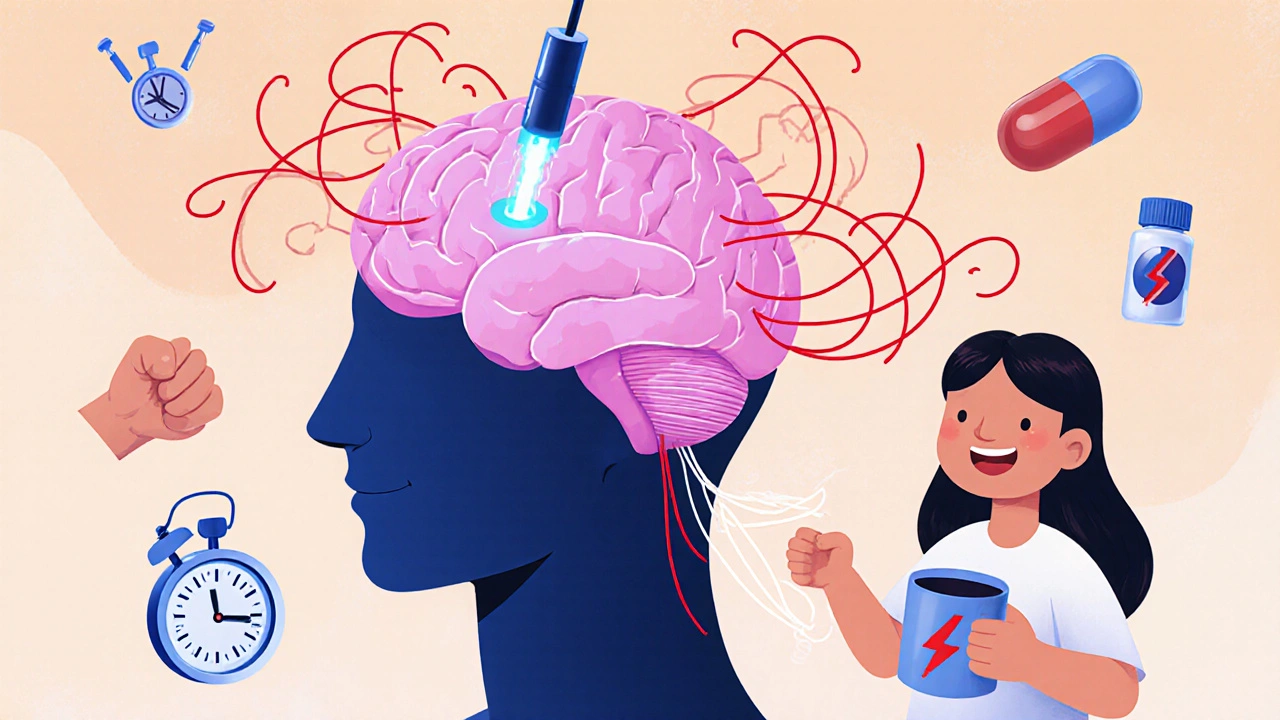
DBS works by targeting specific areas of the brain—like the subthalamic nucleus or globus pallidus—that go haywire in Parkinson's. A small device, similar to a pacemaker, is placed under the skin in your chest. Wires run up to your brain, sending gentle pulses that reset the faulty signals. You don’t feel the stimulation, but you notice the difference: less shaking, better walking, fewer medication side effects. It’s not for everyone. You need to have had Parkinson’s for several years, responded well to levodopa, and still have good cognitive function. If you’re struggling with medication fluctuations or dyskinesia, DBS might be the next step.
It’s not the only option, but it’s one of the most reliable. Other treatments like focused ultrasound or new oral drugs can help, but none match DBS’s long-term control for motor symptoms. And unlike brain surgery from decades ago, today’s DBS is reversible and adjustable. Your doctor can tweak the settings remotely as your needs change. Many patients say it gives them back time—with family, at work, even just walking the dog.
Below, you’ll find real-world insights from people who’ve gone through DBS, comparisons with other Parkinson’s treatments, and clear explanations of what to expect before, during, and after the procedure. Whether you’re considering it for yourself or a loved one, these articles cut through the noise and give you the facts you need to decide.
Deep Brain Stimulation (DBS) can dramatically improve motor symptoms for people with Parkinson’s who respond to levodopa. Learn who qualifies, how it works, what to expect, and why so few eligible patients get it.