

When you’re trying to lose weight, the biggest fight isn’t with the scale-it’s with hunger. You cut calories, you feel starving by mid-afternoon, and suddenly that salad looks like a suggestion, not a meal. Then there’s the fear: lose weight, lose muscle. You don’t want to get smaller and weaker. You want to get leaner and stronger. That’s where protein prioritization isn’t just a trend-it’s the most reliable strategy you’re not using.
Why Protein Isn’t Just for Bodybuilders
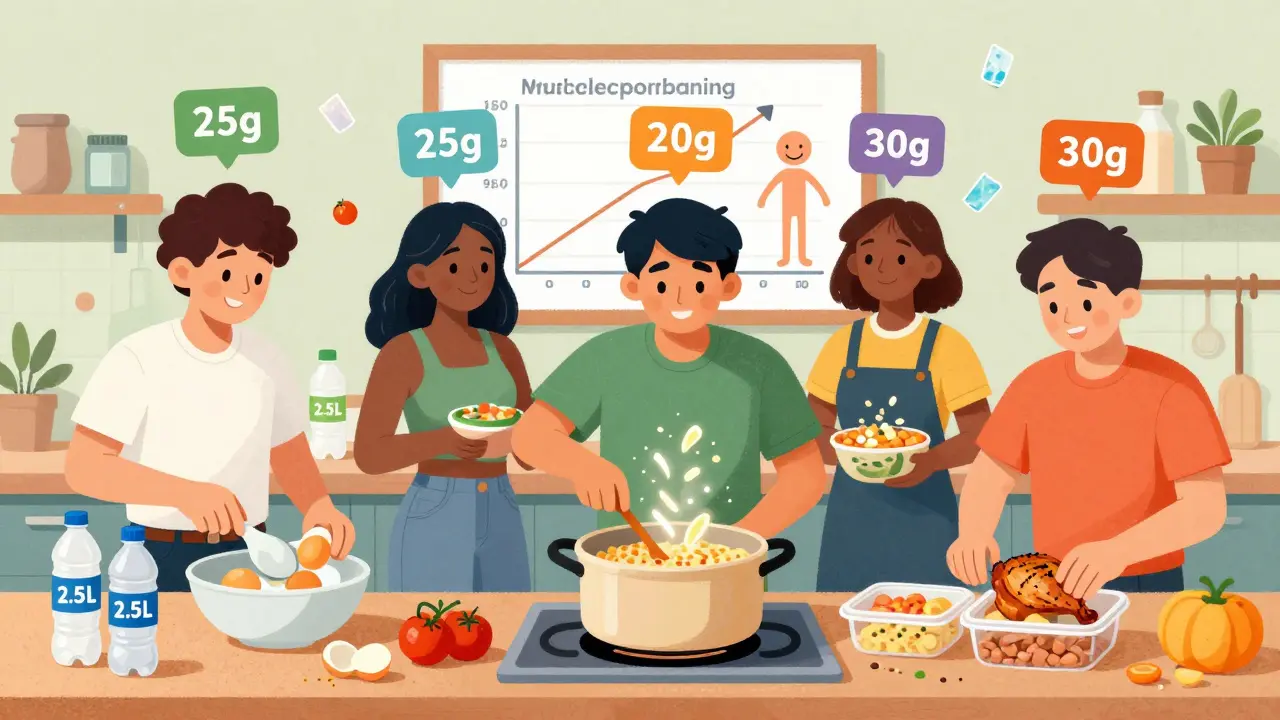
Most people think protein is for lifting heavy. But the science shows it’s essential for anyone trying to lose fat without losing muscle. When you eat fewer calories, your body starts breaking down muscle for energy. That’s bad. Muscle burns more calories at rest than fat. Lose it, and your metabolism slows down. You regain weight faster. Protein stops that. Research from Dr. Jose Antonio’s 2024 meta-analysis of over 3,200 people found that eating at least 1.3 grams of protein per kilogram of body weight every day during weight loss prevents muscle loss. Below that? You start losing muscle fast. At 1.6 g/kg/day, you preserve nearly all of it. That’s not guesswork-it’s backed by 47 studies. And it’s not just about quantity. Timing matters. Eating 25-30 grams of protein per meal, spread across three or four meals, keeps your muscles stimulated all day. One big protein dinner won’t cut it. Your body can’t store protein like it stores fat or carbs. It uses what it gets, then lets the rest go. So if you only eat protein at dinner, your muscles go hungry for 16 hours.The Satiety Effect: Protein Keeps You Full Longer
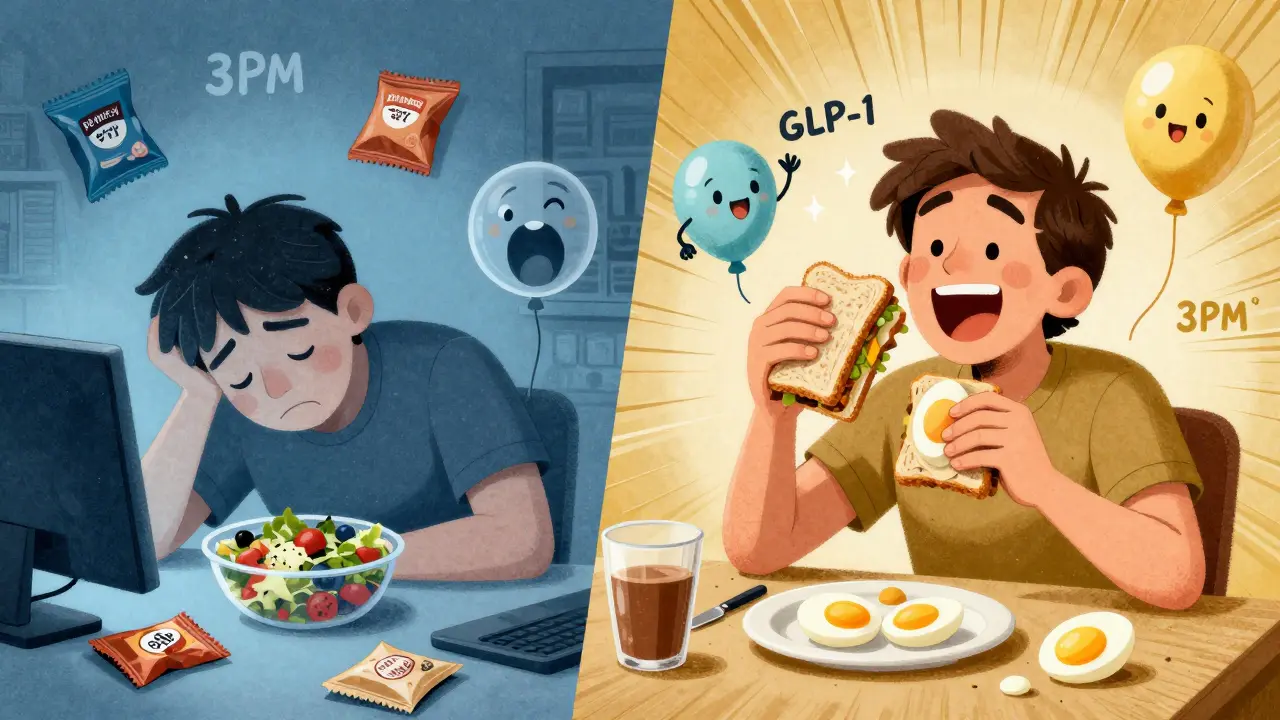
Hunger is the number one reason people quit diets. Protein changes that. It triggers hormones that tell your brain, “You’re done eating.” A 2021 study by Dr. Richard Mattes at Purdue University showed that meals high in protein increase peptide YY by 25% and GLP-1 by 20%. These are fullness signals. At the same time, ghrelin-the hunger hormone-drops by 13%. Compare that to a carb-heavy meal: you’re hungry again in two hours. With protein, you stay satisfied for four or five. That’s why people who prioritize protein stick to their diets longer. The National Weight Control Registry found that 83% of people who successfully kept off 30+ pounds for over a year intentionally ate more protein. Not because they loved chicken breast, but because they didn’t feel like eating junk between meals.How Much Protein Do You Actually Need?
The official RDA is 0.8 grams per kilogram of body weight. That’s the bare minimum to avoid deficiency-not to lose fat and keep muscle. For weight loss, you need more.- Active adults (20-65): 1.6 g/kg/day. For a 75 kg person, that’s 120 grams daily.
- Older adults (65+): 1.2-1.6 g/kg/day. Muscle loss accelerates after 65. You need more to fight sarcopenia.
- During weight loss: Don’t drop below 1.3 g/kg/day. Below that, muscle loss accelerates.
- Upper limit: 2.2 g/kg/day is the max benefit. Above that? No extra muscle gain. Just more cost and potential digestive strain.
Protein Quality: Not All Sources Are Equal
Eating 100 grams of protein from beans won’t have the same effect as 100 grams from chicken or eggs. Why? Leucine. Leucine is the amino acid that flips the switch for muscle growth. You need at least 2.5-3.0 grams per meal to trigger muscle protein synthesis. That means:- 30g of whey protein = 2.9g leucine
- 30g of chicken breast = 2.7g leucine
- 30g of tofu = 1.8g leucine
- 30g of lentils = 1.2g leucine
What Happens If You Don’t Prioritize Protein?
A 2023 trial by Dr. Reza Bagheri compared two groups losing weight: one ate 0.8 g/kg/day (standard RDA), the other ate 1.6 g/kg/day. After 12 weeks:- Low-protein group: Lost 4.1 kg of fat… and 1.3 kg of muscle.
- High-protein group: Lost 4.3 kg of fat… and only 0.1 kg of muscle.
Cost, Convenience, and Real-Life Hacks
Yes, eating more protein costs more. USDA data shows high-protein diets increase food bills by about 18%. But you don’t need to buy expensive whey or organic chicken every day. Here’s how to do it affordably:- Canned tuna: $0.12 per gram of protein
- Eggs: $0.15 per gram
- Cottage cheese: $0.18 per gram
- Whey isolate: $0.31 per gram
Common Mistakes (And How to Avoid Them)
Most people fail not because protein doesn’t work-they just do it wrong.- Ignoring fiber: High protein + low fiber = constipation. Add veggies, chia seeds, or psyllium husk. Mayo Clinic data shows 37% of new high-protein dieters get constipated.
- Drinking too little water: Protein metabolism needs water. Above 2.5 g/kg/day? Risk of dehydration or kidney strain. Drink at least 2.5 liters daily.
- Only eating protein at dinner: Spreading it out is key. Aim for 30g at breakfast, lunch, dinner, and maybe a snack.
- Thinking more is always better: 2.2 g/kg/day is the ceiling. Above that? No extra benefit. Just more cost and bloating.
Who Should Skip This?
Protein prioritization works for most people trying to lose weight. But it’s not magic.- Sedentary people: If you don’t move or lift, extra protein won’t build muscle. You’ll still get satiety benefits, but muscle preservation is minimal.
- People with kidney disease: Talk to your doctor before increasing protein intake.
- Those on very low budgets: If you can’t afford eggs, chicken, or dairy, focus on affordable plant proteins and combine them smartly.
What’s Next? The Future of Protein
The science keeps evolving. In 2025, companies like Nutrisense and Levels Health started using glucose monitors to time protein intake based on your body’s response. If your blood sugar spikes after a meal, they suggest adding protein to stabilize it. The 2026 Dietary Guidelines are expected to raise the minimum recommendation from 0.8 to 1.0 g/kg/day-finally catching up to the science. And here’s the kicker: the International Osteoporosis Foundation now recommends 1.2 g/kg/day for older adults to reduce hip fracture risk by 23%. That’s not just about looking good. It’s about staying independent as you age.Start Here: Your Simple 7-Day Plan
You don’t need a PhD to do this. Just follow this:- Calculate your protein goal: Weight in kg × 1.6 = daily grams.
- Divide that into 3-4 meals. Aim for 25-30g per meal.
- Start breakfast with protein: Eggs, Greek yogurt, or cottage cheese. Don’t skip it.
- Swap one carb-heavy snack (crackers, chips) for a hard-boiled egg or a small can of tuna.
- Use canned beans, lentils, or tofu if you’re plant-based-combine them with grains.
- Drink water. At least 2.5 liters a day.
- Track for 7 days. Use a free app like MyFitnessPal. See how full you feel.
Final Thought: It’s Not About Eating More Meat
Protein prioritization isn’t about eating a pound of chicken every day. It’s about making sure every meal has enough to keep your muscles intact and your hunger quiet. It’s about choosing food that works with your body, not against it. The science is clear. The results are real. And the best part? You don’t need a gym membership or a nutritionist to start. Just a few smart swaps-and the will to eat like your future self depends on it. Because she does.How much protein do I need to preserve muscle while losing weight?
For most adults, aim for 1.6 grams of protein per kilogram of body weight per day. For example, if you weigh 75 kg (165 lbs), that’s about 120 grams daily. During weight loss, don’t go below 1.3 g/kg/day-below that, you risk losing muscle. Older adults (65+) should aim for 1.2-1.6 g/kg/day to combat age-related muscle loss.
Does protein help with hunger and cravings?
Yes. Protein increases fullness hormones like peptide YY and GLP-1 by 20-25%, while reducing the hunger hormone ghrelin by 13%. This means you feel satisfied longer after meals, reducing cravings and snacking between meals. People who prioritize protein in their diets are more likely to stick to weight loss plans long-term.
Is plant-based protein as good as animal protein for muscle preservation?
Not quite. Animal proteins like eggs, dairy, and meat contain more leucine-the amino acid that triggers muscle growth. Plant proteins like beans and tofu have less, so you need to eat more of them or combine sources (like rice and beans) to get the same effect. Some plant-based protein powders are fortified with extra leucine to help bridge the gap.
Can eating too much protein hurt my kidneys?
For healthy people, no. Studies show protein intakes up to 2.2 g/kg/day are safe. But if you have existing kidney disease, higher protein can strain your kidneys. Always talk to your doctor before making major dietary changes if you have kidney issues. Also, make sure you drink enough water-aim for at least 2.5 liters daily when increasing protein.
Why am I constipated since I started eating more protein?
High-protein diets often mean cutting carbs, which also means cutting fiber. That’s the main cause. Add more vegetables, chia seeds, flaxseed, or psyllium husk to your meals. Drink plenty of water. Mayo Clinic data shows 37% of new high-protein dieters experience constipation-not because of protein, but because of low fiber intake.
Is it worth the extra cost to eat more protein?
It costs about 18% more to eat a high-protein diet, but the payoff is better adherence and less muscle loss. You don’t need expensive whey or organic meat. Use affordable options like eggs, canned tuna, cottage cheese, lentils, and tofu. Batch cook, buy in bulk, and plan meals ahead. The cost is an investment in staying strong and avoiding weight regain.
Do I need to take protein powder?
No. You can get all the protein you need from whole foods. But if you struggle to hit your daily target-especially if you’re busy or vegetarian-protein powder can help. Whey, casein, or plant-based blends with added leucine can fill the gap in one serving. Use it as a tool, not a crutch.



Jay Ara
man i tried this for 2 weeks and honestly my cravings just vanished
used eggs and canned tuna every day
no more 3pm snack attacks
so simple but it works