
Medication Side Effect Management Guide
Switching Medications
Main Pros
High long-term success; potentially removes the chemical cause of dysfunction.
Main Cons
Requires time to stabilize on a new medication; risk of mood fluctuation during switch.
💡 Conversation Tip:
Ask your doctor: "Are there alternative medications like Bupropion or Mirtazapine that have lower rates of sexual side effects but similar efficacy for my condition?"
Imagine finally feeling the fog of depression lift, only to find that your drive for intimacy has completely vanished. You're feeling mentally better, but your relationship is suddenly under immense strain because the very medication saving your mind is affecting your body. This is a frustratingly common reality for millions. In fact, between 58% and 70% of people taking certain antidepressants experience some form of sexual dysfunction. The real tragedy isn't just the side effect itself, but the silence surrounding it. Many people suffer in secret for months, or worse, stop their life-saving medication entirely without telling their doctor because they're too embarrassed to bring it up.
The good news is that you don't have to choose between your mental health and your sex life. Sexual side effects is a common physiological response to certain medications, particularly psychotropic drugs, that impacts desire, arousal, and orgasm. While it feels overwhelming, these issues are manageable through proactive counseling and clinical adjustments. This guide explores how to navigate these conversations and the specific strategies used to bring back your intimacy.
Why These Side Effects Happen and Who They Affect
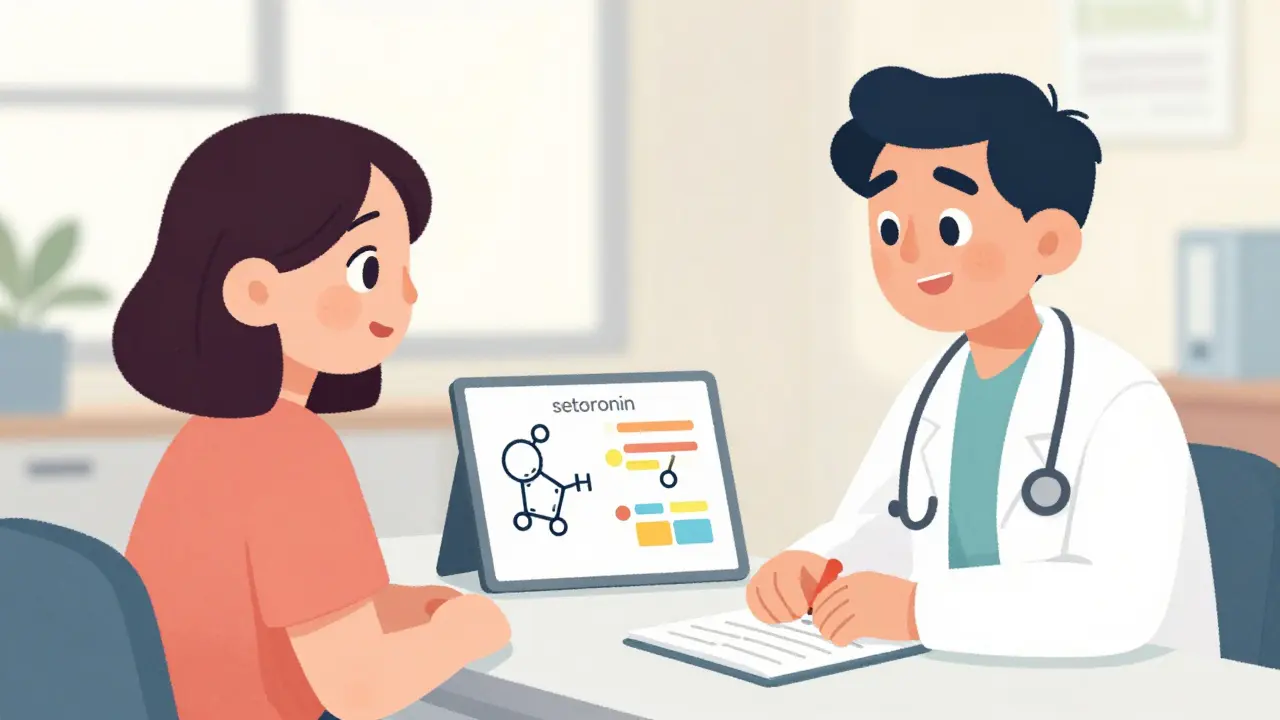
It mostly comes down to brain chemistry. Many antidepressants, specifically SSRIs (Selective Serotonin Reuptake Inhibitors), work by increasing serotonin levels. While this helps stabilize your mood, too much serotonin in certain parts of the brain can dampen sexual desire and make it harder to reach orgasm. This isn't just a "head game"-it's a chemical shift.
The experience varies wildly depending on the person and the drug. For men, the most common issues are a loss of desire (62% of cases) and difficulty maintaining an erection (48%). Some also experience delayed ejaculation, where it takes much longer than usual-or feels impossible-to reach a climax. For women, the struggle is often a lack of interest in sex (57%) or difficulty achieving orgasm (at least 30%). Some women also report painful intercourse, known as dyspareunia, in about 38% of cases.
It's important to realize that depression itself often kills libido. Up to 50% of people with untreated major depression already struggle with sexual function. This makes the conversation with your doctor a bit like a puzzle: is the medication causing the problem, or is it the underlying illness? A professional can help you untangle this by looking at when the symptoms started and how they've changed since you began your prescription.
The Danger of the "Silent Struggle"
There is a massive gap between what happens in the clinic and what happens at home. A startling 68% of patients report that their doctor never even mentioned sexual side effects before they started their medication. Because of this lack of warning, many people assume these changes are just a permanent part of their new life or a sign that they are "broken."
This silence has real-world consequences. About 41.7% of men and 15.4% of women have stopped taking their psychiatric medications specifically because of sexual issues. When people quit "cold turkey" without medical supervision, they risk severe withdrawal symptoms and a total relapse of their mental health condition. This is why structured counseling is so vital-it transforms a shameful secret into a manageable clinical symptom.
Clinical Strategies for Fixing the Problem
If you are experiencing these side effects, you aren't stuck. There are several evidence-based ways to handle this, ranging from simple timing shifts to changing your prescription entirely. Here is how doctors typically approach the solution:
| Strategy | Estimated Success Rate | Main Pros | Main Cons |
|---|---|---|---|
| Switching Medications | 65-70% | High long-term success | Requires time to stabilize on new drug |
| Adjunctive Therapy (e.g., PDE5 inhibitors) | 55-60% (for ED) | Fast acting, targeted | Less effective for orgasm issues |
| Drug Holidays | 40% | Temporary relief | Risk of relapse/withdrawal |
| Dose Reduction | 25-30% | Maintains same drug | May reduce antidepressant effect |
One of the most effective moves is switching to a medication with a different chemical profile. For example, moving from an SSRI to Bupropion (Wellbutrin) or Mirtazapine (Remeron) often solves the problem because these drugs don't impact serotonin in the same way. While SSRIs have a 50-70% incidence of sexual side effects, these alternatives see rates as low as 5-10%.
Another option is "adjunctive therapy," which means adding a second medication to counteract the first. PDE5 inhibitors, like sildenafil, are frequently used to treat erectile dysfunction caused by antidepressants. However, these are "rescue" medications-they help with the physical mechanics of arousal but don't necessarily bring back the emotional desire or the ability to orgasm.
How to Have the Conversation with Your Provider
Talking about your sex life with a healthcare provider can feel awkward, but remember: they have heard this thousands of times. To make the process easier, move away from vague descriptions and use concrete data. Instead of saying "things aren't working," try saying, "Since starting this medication six weeks ago, I've noticed a complete loss of libido," or "I can get aroused, but I cannot reach orgasm."
A good provider should follow a specific framework to help you. If you feel your current care is lacking, you can ask for these specific steps:
- Baseline Assessment: Ask if they can use a tool like the Arizona Sexual Experience Scale (ASEX) to track your symptoms objectively.
- Scheduled Check-ins: Request a specific follow-up at the 4-to-6-week mark to discuss side effects separately from your mood improvement.
- A Contingency Plan: Agree on what happens if the side effects don't improve-will you lower the dose, or is there a backup medication ready to go?
Don't forget the role of your pharmacist. They are often more accessible than your doctor and can provide critical information on how different drugs interact and whether a "drug holiday" (skipping doses before intimacy) is safe for the specific medication you're on. Some drugs have a short half-life, meaning they leave the system quickly, making a holiday more viable, while others stay in your blood for weeks, making this strategy useless.

Beyond the Pills: The Psychological Component
Even when the chemical side effects are managed, the psychological scars can remain. Spending months feeling "numb" or unable to perform can lead to performance anxiety and relationship tension. This is where non-pharmacological interventions come in.
Couples therapy is particularly effective here, with a 50% success rate in improving outcomes when relationship strain has developed. The goal is to move the "blame" away from the partner or the person and place it on the medication. Once both partners understand that the lack of desire is a chemical side effect-not a lack of attraction-the emotional pressure drops, which often helps the physical response return faster.
Some couples also find success with "sexual scheduling." This sounds unromantic, but timing intimacy for when medication levels are at their lowest (such as right before a scheduled dose) can maximize the chances of a successful encounter. It removes the guesswork and the frustration of trying and failing, which only adds to the stress.
Will my sex drive eventually return on its own?
While some people experience a "leveling off" period where side effects diminish after a few months, for the majority, medication-induced sexual dysfunction persists as long as the drug is taken. It rarely disappears entirely without a change in dose, a medication switch, or the addition of a counter-acting treatment.
Is it safe to just skip a few doses of my medication before sex?
This is known as a "drug holiday," and it can be effective for some, but it is not safe for everyone. Medications with a short half-life (like paroxetine) can cause withdrawal symptoms or a relapse of depression if skipped. You must consult your doctor before trying this to ensure your specific medication allows for this approach without risking your mental stability.
What are the best medications to avoid if I'm worried about sexual side effects?
Generally, SSRIs like fluoxetine, sertraline, and paroxetine have the highest rates of sexual dysfunction. If this is a primary concern, doctors often look toward medications like Bupropion or Mirtazapine, which have significantly lower rates of these specific side effects (roughly 5-10% compared to 50-70% for SSRIs).
Can a pharmacist help me manage these side effects?
Yes. Pharmacists are experts in drug mechanisms and can explain why a medication is causing a specific effect. They can also help you understand the timing of your doses to minimize side effects and can act as a bridge to your doctor if you're too nervous to bring the topic up during a short appointment.
Does the same treatment work for women as it does for men?
Not always. Many "rescue" medications, like PDE5 inhibitors, are designed for male erectile dysfunction and have limited effectiveness for female orgasmic dysfunction. While switching medications (e.g., to Bupropion) works for both, women often benefit more from a combination of medication adjustments and specialized sex therapy to address issues like dyspareunia and anorgasmia.
Next Steps and Troubleshooting
If you're currently struggling, your first move should be to track your symptoms. Keep a simple log for two weeks: note your desire levels, any difficulty with arousal, and whether you were able to reach orgasm. This data is gold for your doctor; it turns a vague complaint into a clinical pattern.
If your provider dismisses your concerns by saying "it's just part of getting better," it's time to be firmer. Remind them that sexual health is a component of overall quality of life and that untreated dysfunction is a leading cause of treatment discontinuation. If they aren't willing to explore dose adjustments or medication switches, consider seeking a second opinion from a psychiatrist who specializes in pharmacotherapy management.