
You’ve probably heard that taking a prenatal vitamin is a non-negotiable part of early pregnancy. Most doctors push folic acid because it’s the heavy hitter when it comes to preventing neural tube defects (NTDs). But here is the part they don't always mention in the first five minutes of an appointment: folic acid doesn't just sit quietly in your system. It can actually clash with other medications you might be taking, and in some cases, those medications can block the vitamin from doing its job.
Whether you're planning for a baby or already expecting, understanding how these supplements interact with your current prescriptions is a game-changer for your health and your baby's development. We're talking about everything from seizure medications to common antacids that might be stealthily reducing your nutrient absorption.
The Basics: Why Folic Acid is a Must
To understand the interactions, we first need to look at what we're dealing with. Folic Acid is the synthetic version of folate, also known as Vitamin B9. It acts as a crucial cofactor in DNA synthesis and methylation, which is essentially the biological "instruction manual" for building a fetus.
The timing here is critical. The neural tube-which eventually becomes the brain and spinal cord-usually closes between 21 and 28 days after conception. For most women, this happens before they even see a positive pregnancy test. That is why the Centers for Disease Control and Prevention (CDC) recommends 400 mcg daily for any woman of childbearing age. Once you're pregnant, the target usually bumps up to 600 mcg.
But not everyone processes this synthetic version the same way. About 10-25% of people (depending on ethnicity) have a MTHFR polymorphism, which is basically a genetic quirk that makes it harder for the body to convert folic acid into its active form. If you have this, you might need L-methylfolate instead of standard folic acid to get the same protective benefits.
When Prenatals Clash With Medications
Most of the time, a prenatal vitamin is perfectly safe. However, some medications act like a "blocker," preventing folic acid from working or making the medication itself less effective. This is where you need to be vigilant.
One of the most serious interactions involves anticonvulsants used to treat epilepsy. For example, Phenytoin can have its effects neutralized by folic acid. There have been documented cases of breakthrough seizures when women started high-dose folic acid without adjusting their medication. On the flip side, drugs like carbamazepine can actually deplete your folate levels, meaning women on these meds often need a massive jump in dosage-sometimes up to 4,000-5,000 mcg-under a neurologist's strict eye.
It's not just high-stakes prescriptions. Common medications used for other conditions can also interfere:
- Sulfasalazine: Used for inflammatory bowel disease; it can reduce the efficacy of folic acid.
- Pyrimethamine: Used to treat toxoplasmosis; this drug actively interferes with folate metabolism, often requiring dose adjustments.
- Methotrexate: While typically not used during pregnancy, coordinated folic acid administration is often used to mitigate its toxicity in specific medical emergencies.

Hidden Interference: Supplements and Over-the-Counter Drugs
You don't need a prescription for a medication to interfere with your prenatal vitamins. Some of the most common "blockers" are found in the pharmacy aisle or your kitchen.
Take antacids, for example. If you're struggling with pregnancy heartburn and popping antacids frequently, be careful. Antacids can reduce folic acid absorption by as much as 50%. Similarly, calcium-rich foods or supplements can cut absorption by about 25%. The best rule of thumb? Take your folic acid on an empty stomach with water, and keep your calcium or antacids a few hours apart.
Even the prenatal vitamin itself can be a source of conflict. Many prenatals combine folic acid with iron. While convenient, iron can actually reduce the absorption of folic acid by 20-30%. This is why many women report nausea from "all-in-one" pills and eventually switch to taking a separate folic acid supplement and iron pill at different times of the day.
| Factor | Effect on Folic Acid | Recommended Action |
|---|---|---|
| Antacids | Reduces absorption by ~50% | Separate intake by 2-4 hours |
| Calcium-rich foods | Reduces absorption by ~25% | Avoid taking simultaneously |
| Iron (in same pill) | Reduces absorption by 20-30% | Consider separate supplements |
| Phenytoin | Folic acid may reduce drug efficacy | Consult neurologist for dose tuning |
Comparing Your Options: Synthetic vs. Natural
When you go to the store, you'll see "Folic Acid" and "Folate." They aren't the same thing. Folic acid is the synthetic version found in supplements and fortified grains (like white bread and cereal). Folate is the naturally occurring form found in spinach and lentils.
Interestingly, the synthetic version is actually absorbed better by your body. While food folate has about 50% bioavailability, supplements provide nearly 100% absorption when taken on an empty stomach. This is why doctors insist on the supplement over just "eating more greens"-the margins for error are too slim when you're trying to prevent NTDs.
If you're choosing a brand, you'll notice a price gap. Basic options like CVS Health Prenatal are affordable, while premium brands like Thorne or specialized Quatrefolic® options (designed for those with MTHFR issues) can be significantly more expensive. The key isn't always the price, but the specific form of folate and the absence of conflicting ingredients like excessive iron if you have a sensitive stomach.
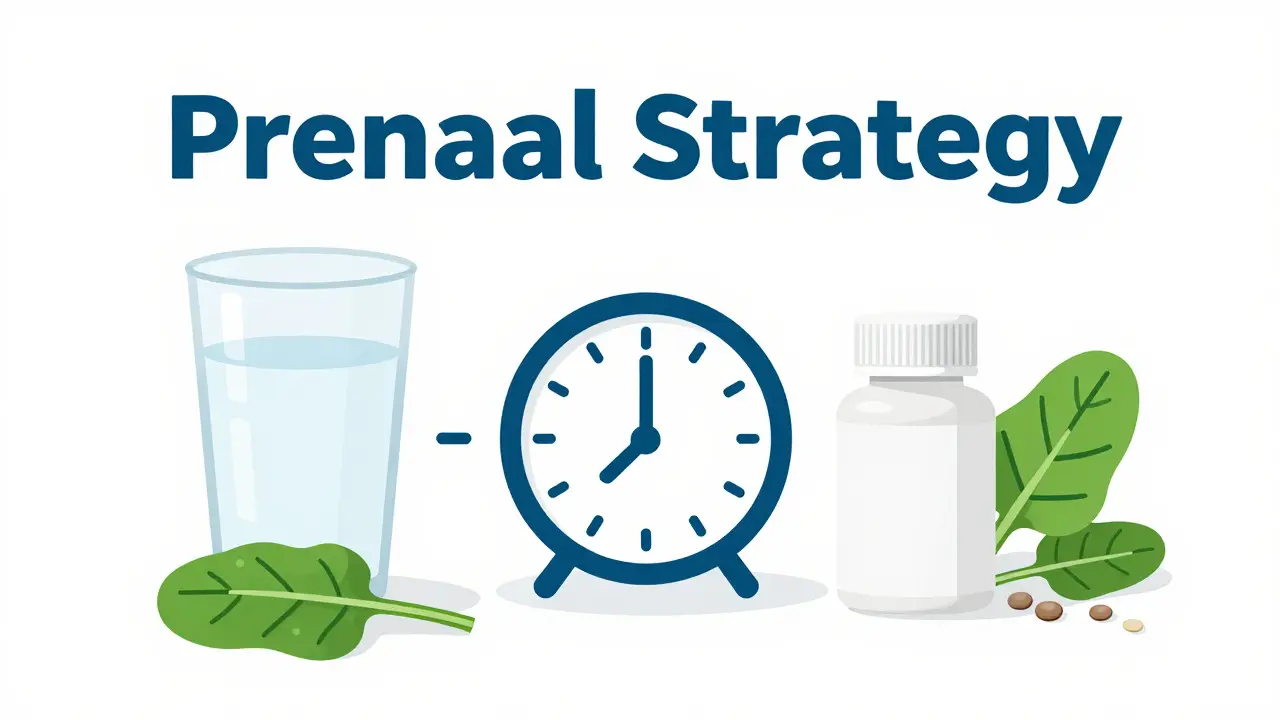
Safe Implementation: Your Prenatal Checklist
Managing your supplements doesn't have to be a full-time job, but a little strategy goes a long way. If you want to maximize the benefits and minimize the risks, follow these practical steps:
- Start Early: Begin taking folic acid at least one month before you plan to conceive. Since the neural tube closes by day 28, waiting until the first ultrasound is often too late.
- Audit Your Meds: List every prescription, over-the-counter drug, and herbal supplement you take. Bring this list to your OB/GYN and specifically ask, "Do any of these interfere with folate absorption?"
- Timing is Everything: Take your folic acid with water on an empty stomach. If you take iron or calcium, schedule them for a different time of day.
- Check Your Dose: For most, 400-800 mcg is the "sweet spot." However, if you have a history of epilepsy or are taking specific medications, you might need a therapeutic dose (up to 5,000 mcg). Never do this without a doctor's supervision, as excessive doses can potentially mask a Vitamin B12 deficiency.
Can I take too much folic acid?
For most adults, the upper limit is around 1,000 mcg per day. While the CDC states there are no confirmed health risks from circulating unmetabolized folic acid, some experts suggest that doses significantly exceeding 1,000 mcg should be monitored to ensure they aren't masking other deficiencies, like Vitamin B12, or interfering with other medications.
What is the difference between folic acid and methylfolate?
Folic acid is synthetic and must be converted by the body into its active form. Methylfolate is the "pre-converted" active form. This is particularly important for people with the MTHFR gene mutation, who struggle to convert synthetic folic acid efficiently.
Does eating spinach replace the need for a supplement?
While spinach is great, it's hard to get the precise, high dose of folate needed to guarantee the prevention of neural tube defects through food alone. Synthetic folic acid has much higher bioavailability (nearly 100% in supplement form) compared to food folate (~50%), making supplements the medical standard of care.
Will a prenatal vitamin make my blood pressure medication stop working?
Generally, folic acid doesn't have a broad interaction with common blood pressure meds. However, you should always check with your doctor, as other components of a prenatal vitamin (like potassium or certain minerals) might interact with specific antihypertensives.
Why do some women feel nauseous taking prenatal vitamins?
The nausea is most often caused by the iron content, not the folic acid. To fix this, many women take their folic acid separately and move their iron supplement to nighttime or take it with a small snack, provided it doesn't interfere with absorption.
Next Steps and Troubleshooting
If you've just realized you're taking a medication that interacts with folic acid, don't panic. The first step is to contact your prescribing physician. Do not stop taking an anticonvulsant or any chronic medication just to take a vitamin; this could cause a medical emergency.
For those with a history of MTHFR mutations, ask your doctor about a "folate-only" supplement or a prescription prenatal that uses 5-MTHF. If you're experiencing extreme nausea, try splitting your supplements-take your folic acid in the morning and your iron-rich multivitamin at night.